


“Hi dad, it’s me, I’m writing to you from another number because I lost my mobile.” If you receive a message like that on your mobile, or through social media, be suspicious, as it is a method used by scammers to fraudulently obtain money.
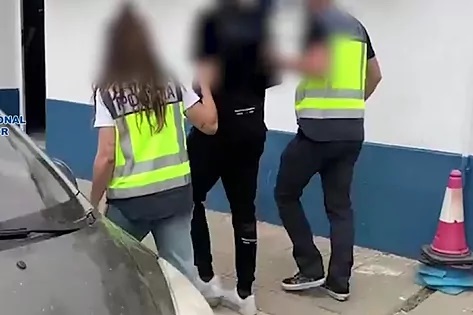
However, one such group has been caught and locked up, after the National Police investigated various instances of the scam, resulting in 14 detainees in Salt and Banyoles (Girona).
They are accused of defrauding victims with the ‘son in distress’ method. The investigation began after the alert of the anti-fraud group of a bank that received numerous complaints from victims throughout Spain after suffering the scam. The police found the scammers following the money trail because when the victim sent the transfer to a bank, the funds were distributed to other accounts to try to erase their trail.
This is how the suspects were located in Banyoles and Salt and 14 people who made up the gang were arrested. Among those arrested is the leader of the organisation in Banyoles, who was in charge in that town of recruiting young people between the ages of 20 and 30 to carry out these scams or also to act as “mules”, that is, to receive the money scammed from the victim in exchange for financial compensation from the organisation. In this way, by making the account that receives the money not just one but all the accounts of the “mules”, the organisation believed that it was making it difficult to follow the trail of the money and the identity of the fraudsters.
The criminal organisation was divided into different levels forming a pyramid business scheme. On the one hand there were “mules”, the lowest and most numerous echelon, who were recipients of fraudulent money from scams. These ‘mules’ are part of the gang because of the recruiters located on a higher step and among whom was the boss arrested in Banyoles. Those who played this role had worked as “mules” to later be promoted in the organisation in exchange for recruiting new members for it. At the top of the pyramid would be the supervisors, in charge of coordinating and collecting all the money coming from the scams.
The investigation remains open and new arrests are not ruled out.
One piece of advice to help avoid being a victim of this type of crime is to decide a safe word between families, which can be communicated in the event of a real situation arising, although it is hopefully rare. In any case, unless predetermined, you should be particularly suspicious of any unsolicited communications.
The post Mobile “Hi dad” fraudsters arrested appeared first on Spain Today – Breaking Spanish News, Sport, and Information.