





Following this week´s presentation of the latest amendment to the road traffic laws, the Directorate General of Traffic (DGT), María Segui, has released the final draft which features a number of important changes to the rules of the road.
This is a guide to some of those changes, but is based on the final draft presentation and should not be assumed to be legally binding. For the full and correct advice, you should speak to an authorised legal entity that specialises in traffic law.
Speed
The speed limits will be modified, both upward and downward, with the controversial increase to 130 kilometres per hour on some motorways being retained in the act. “It will be exceptional and restricted”, according to Segui, with signs indicating when the maximum permitted limit has been eased, and only in sections where there are suitable safety indices, good layout and surface conditions and weather and environmental conditions.
On conventional roads, the standard maximum permitted limit is reduced from 100 to 90 kilometres per hour, on roads where there is a width at or above 6.5 meters, and on those that are narrower, the maximum speed is 70 kilometre per hour if there is a longitudinal mark that separates the two directions, and 50 kilometres per hour in any other case.
In cities, where the current maximum is set at 50 kilometres per hour, this will be reduced to 30 in the streets with one lane in each direction of traffic or a single lane, and 20 kilometres per hour on roads where there may be a particular risk to pedestrians and cyclists.
Bicycles
The requirement cyclists wear helmets when riding in towns and cities is still open to a final discussion, following criticism from cycling groups and some politicians, but Segui has already suggested that “there is no going back”.
Cyclists are permitted to ride on pavements wider than 3 metres, and in both directions, when the road traffic is limited to a maximum speed of 30 kilometres per hour. Cycle trailers for carrying goods and people are also now permitted. Cyclists will also have an element of freedom in choosing lanes to ride in on the road, such as to turn into a minor street, allowing them to use other lanes “when they need to”.
Seatbelts
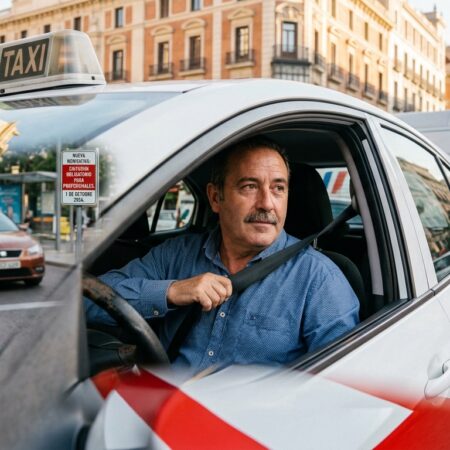
All previous exceptions to wearing seatbelts, such as delivery drivers, taxi drivers and the police, have had the exemption clause withdrawn. Now, the only time not wearing a seatbelt may be permitted is when it is expressly required for the purposes of parking or reversing.
Child seats
Children who are 1.35 meters tall or less must ride in the rear seats of the car, not the front. In addition, children under four years using most restraining systems must travel facing the opposite direction of travel if the child seat permits it.
Radar detectors
The amendment expressly prohibits “mechanisms for the detection of radars”, but refers to systems capable of locating mobile radars, not GPS systems which have information relating to fixed cameras, which is also published on the website of the DGT.
Drugs
The new code institutionalizes saliva tests for the detection of drugs whilst driving. The applicant may also request a blood test, which will also feature in the case of a positive result.
Advanced zone
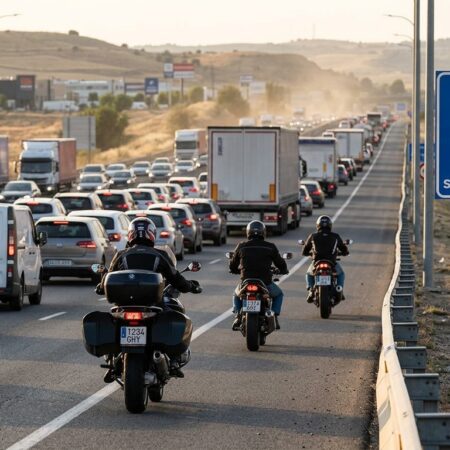
For the first time, the law will allow drivers of motorcycles, mopeds and bicycles to move ahead of the stop line and circling cautiously among the other vehicles.
Motorhomes
Previously only controlled by municipal and local legislation, parking of motorhomes is now limited by “mass and dimension restrictions affecting all vehicles”. They must not overflow the perimeter, discharge fluids or connect to utility supplies.
Again, this is only a guide to the rules of the law. The full road traffic act is also available via the official, legal channels.
Filed under: http://www.theleader.info/article/39323/
Car and Motor Insurance | Spanish Home Insurance | International Money Transfers | Send Money to Spain | Spain Property | Online International Payments | Property in Spain
Costa Blanca Property for Sale | Cabo Roig Property for Sale | International Payments |
The post CHANGES TO TRAFFIC LAWS EXPLAINED appeared first on Today in Spain.