




The Guardia Civil, in the so-called FARAX operation, carried out in Tarragona, has investigated 5 people belonging to a criminal organisation dedicated to the production and sale of counterfeit products over the Internet. In the operation, more than 5,500 counterfeit presses valued at 3 million euro were seized, three bank accounts were blocked, and two websites were closed.
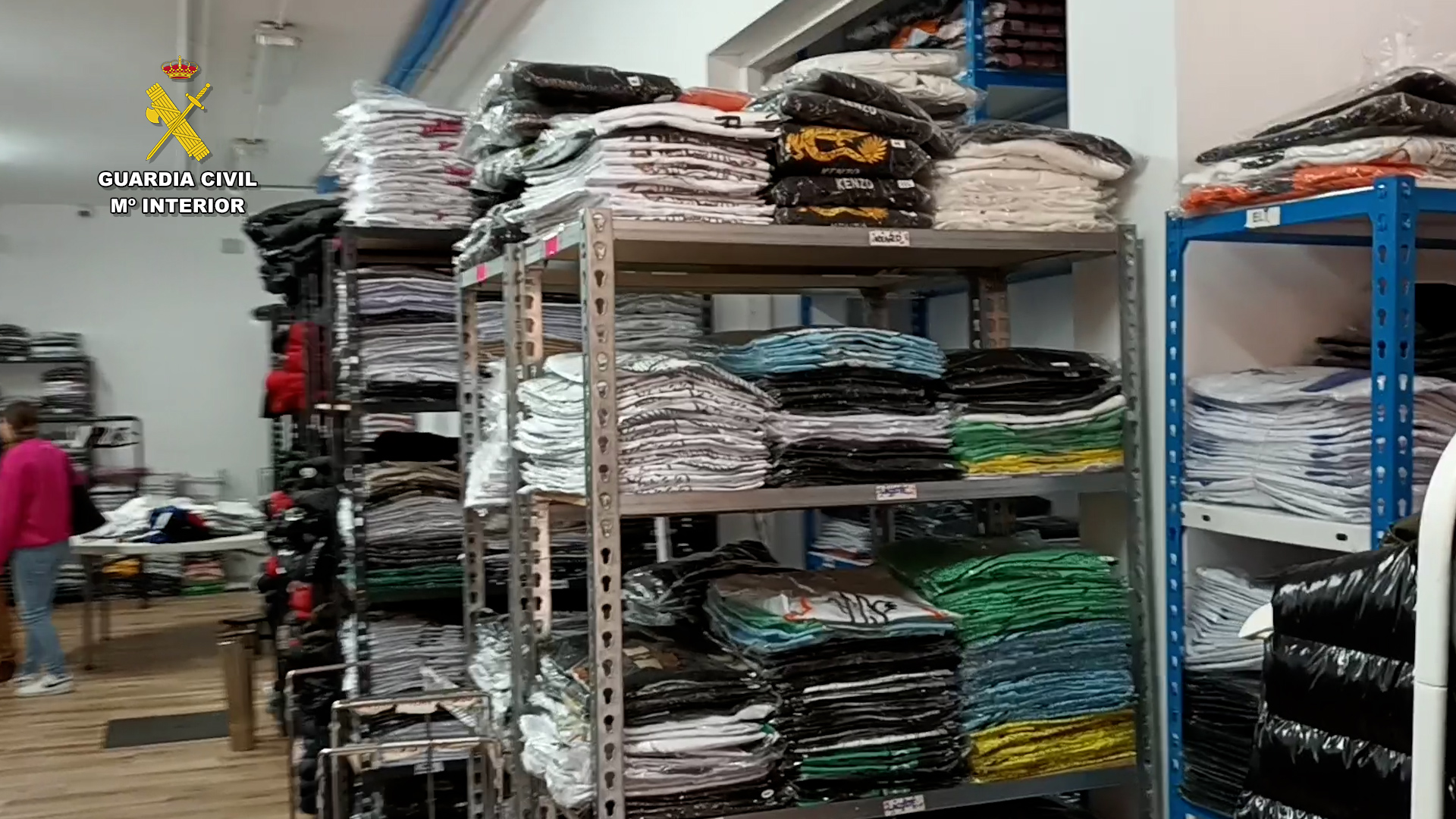
Likewise, a search was carried out in a home in the town of Riudecanyes (Tarragona), where a large warehouse of counterfeit clothing from various luxury brands and cash was located.
The operation began in June, when the Guardia Civil learned that a person was distributing counterfeit clothing from high-value brands, which he offered through a website.
Continuing with the investigations, and following a complaint filed by an injured party in the month of October, the agents verified the existence of several web pages similar to the one reported. Linked to them, the agents found several commercial companies, of which several people who were being investigated were administrators.
Once the people responsible for the companies and websites were identified, a person who owned a detached house in the town of Riudecanyes was identified. This home was not listed as the headquarters or warehouse of any company or legal entity that was behind the detected websites.
Subsequently, it was possible to verify how large quantities of packages were introduced into said home and taken in vehicles belonging to a company dedicated to the transport of goods between Romania and Spain. These packages contained the counterfeit clothing and other items. In turn, the agents were able to verify the daily outgoing flow of packages collected by workers from various transport or courier companies, with the aim of delivering them to buyers.
It was also detected that in addition to the people who owned it, four people who worked for the organisation came to the house every day. These people carried out long days of daily and continuous work, without being able to leave the house, not even to rest or eat outside.
As a result of the investigations, the agents have been able to verify that the organisation was perfectly structured and that each person had their defined roles. Some made the textile garments, imitating clothing models from high-end commercial brands and others offered them on well-known social networks, to later facilitate purchasing through web pages managed directly by members of the organisation, as well as through customer profiles on a well-known social network.
The price of the counterfeit products was lower than the originals, and the delivery method to the “buyers” was through shipments from well-known transport companies.
In total, 5,513 textile items valued at 3 million euro and other counterfeit items (perfumes and children’s shoes), packages with counterfeit items prepared to be sent, 1,840 euro in cash, as well as various computer equipment, have been seized.
It should be noted that some of the garments, such as t-shirts, exceeded 200 euro on the market, and coats or jackets that marked amounts greater than 900 euro.
The sale of counterfeit material generates significant economic losses and the destruction of thousands of jobs in Spain and other countries in the European Union. According to a report by the European Union Intellectual Property Office (EUIPO), the economic and social damage caused by the counterfeit trade deprives countries of new revenue and can support serious forms of crime, such as drug trafficking and money laundering.
The post Counterfeit products internet sales gang shut down appeared first on Spain Today – Breaking Spanish News, Sport, and Information.
Other Articles

Deck the Halls…
Head-On Crash in San Pedro