




The Guardia Civil has located two Gibraltar monkeys locked in a cage in the private courtyard of a Granada resident’s home. The man – aged 56 – is being investigated for two crimes, one against wild fauna and flora and the other against animals.
The Guardia Civil learned through a communication received at the Guardia Civil’s citizen service office that two macaca sylvanus, also known as Gibraltar monkeys, were locked in cages in the courtyard of a house located in Granada.
After receiving this complaint, the Nature Protection Team (SEPRONA) of the Granada Command began an investigation to verify the veracity of these facts.
The investigation by SEPRONA agents led to the determination that there were indeed two specimens of macaca sylvanus locked in cages in the courtyard of a house. This animal species is protected in Appendix I of the CITES Convention (Convention on International Trade in Endangered Species of Wild Fauna and Flora) within the maximum possible protection, and its possession by individuals is prohibited.
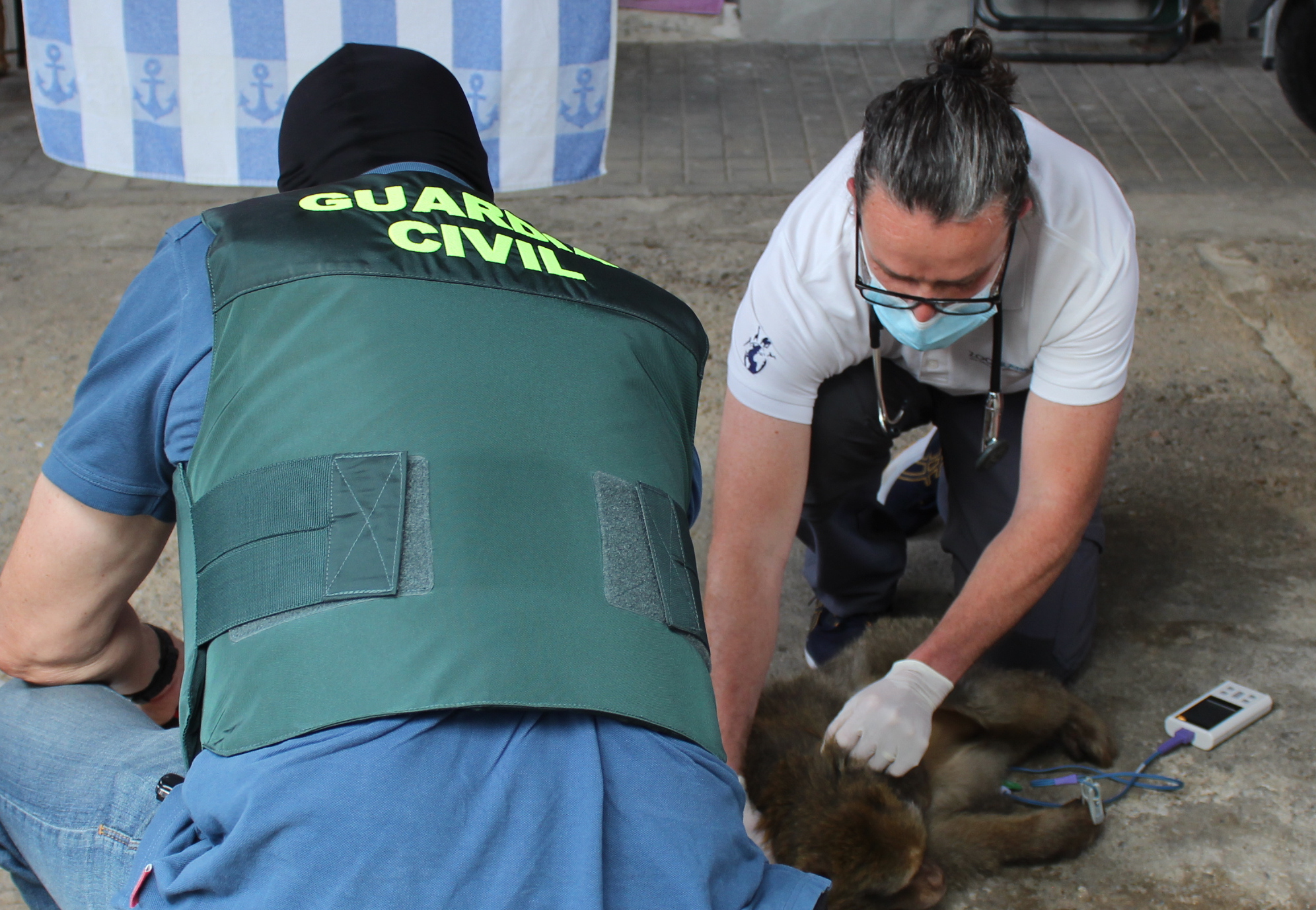
The Guardia Civil contacted the AAP PRIMADOMUS Foundation, dedicated to the protection and defence of animals and a centre for the rescue and rehabilitation of exotic mammals, and requested their collaboration to take care of the animals.
Veterinarians from the foundation accompanied the agents to the home and confirmed that, in addition to the crime against wild fauna and flora for the possession of prohibited animals, a crime of continued animal abuse was being committed. The macaca sylvanus, a male and a female, were kept separated and locked in rusty cages with sharp protrusions, in very poor hygienic and sanitary conditions, without continuous water supply or shelter in case of adverse weather conditions in one of the cases. They also showed signs of diseases derived from poor nutrition for years, alopecia, cavities, missing teeth, polyuria and polydipsia associated with diabetes, Cushing’s and/or metabolic diseases.
Primates suffer from and transmit diseases to people such as tuberculosis, AIDS or herpesvirus, so keeping these animals in captivity without the corresponding analytical tests to certify that they are free of these diseases is a risk to public health. In this case, the animals had been without veterinary control for more than fifteen years, all due to their illegal status.
The Guardia Civil has proceeded to seize the animals, which have been taken over by the AAP PRIMADOMUS foundation, which will be responsible for their care and rehabilitation, although the two macaca sylvanus specimens are at the disposal of the Court that is hearing the case.