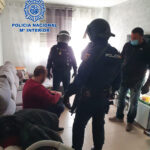






Agents of the National Police have dismantled a clandestine cocaine hydrochloride processing laboratory located in a place in Recas (Toledo). Five people have been arrested and 50 kilograms of cocaine hydrochloride and 3,000 litres of chemical precursors have been seized. Four of those arrested were cooks – two of them expressly displaced from Colombia – since they were the only people with the necessary technical knowledge to carry out the drug handling process. The organisation had the necessary infrastructure to produce about 150 kilograms of cocaine per month.
Clandestine Cocaine Laboratory
The investigation began at the beginning of this year when the agents learned of the presence of a criminal organisation that, allegedly, had installed a clandestine laboratory in the southern area of Madrid in which they were dedicated to the extraction, production and adulteration of hydrochloride cocaine. With this information, the agents began the appropriate steps to obtain their location as well as all possible information on the criminal organisation involved.
On the other hand, and as a result of international cooperation channels, they became aware of information related to the existence of a group of drug traffickers settled in Spain, who was waiting for an important shipment of narcotic substance hidden in a maritime container bound for Valencia. They also reported that the criminal network in Spain had created a centre for the extraction, transformation and adulteration of the narcotic substance in the province of Toledo.
Surveillance to detect police presence
With all this information, the agents managed to locate a farm located in Recas (Toledo) and found that it was a property with four buildings where the laboratory was located. In it, several people carried out constant surveillance work around the perimeter in order to try to detect any possible police presence.
Finally, the investigators proceeded to assault the laboratory, carried out by the Special Operations Group (GEO), where four men of Colombian nationality, known as cooks, were detained, who were carrying out the process of transformation and adulteration of cocaine hydrochloride, and a Spanish man who performed custody and surveillance functions in the laboratory.
Numerous precursor and cutting substances
The first building was the only one that met the minimum conditions of habitability and where the organisation had established a clandestine laboratory and a rest area for cooks, two of whom had expressly travelled from Colombia for said mission. In the living room of the house, where about 50 kilograms of cocaine hydrochloride were found in the last stage before crystallising, the area for filtering, pressing and packaging the narcotic substance was located and the kitchen had provided the area for dried and finally packed. They also had numerous precursor and cutting substances, as well as various appliances and appliances, including a large hydraulic machine used to press the drug.
Due to the technical complexity of the dismantled facilities and the amount of chemical products found, it could be estimated that the organisation had a production capacity of about 150 kilograms of cocaine per month.