




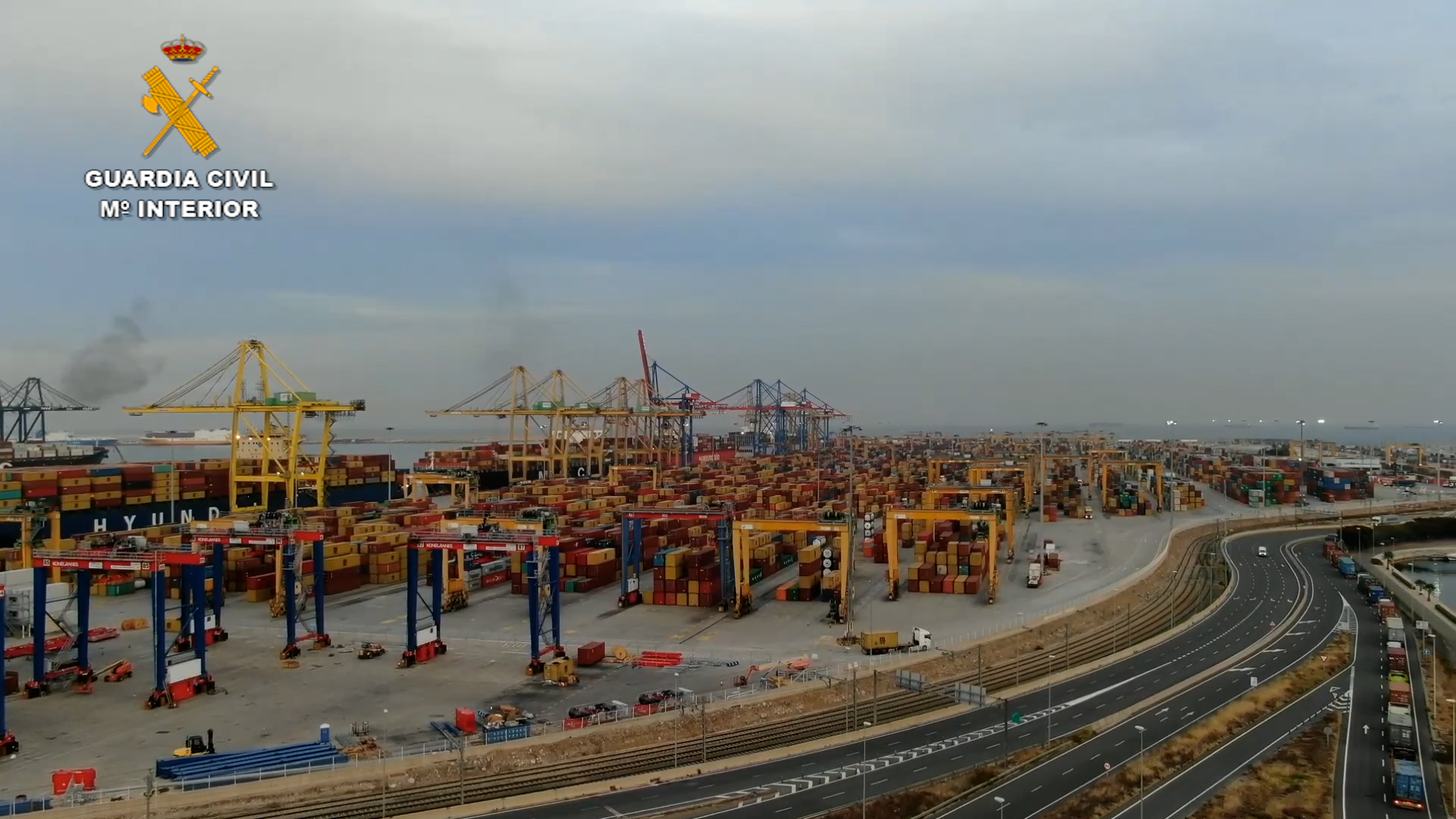
The Guardia Civil, within the framework of the Operation PINDAAN, has dismantled a criminal organisation that was dedicated to the irregular transfer of plastic waste to Malaysia, Cambodia, Thailand, among other Asian countries. 27 people who formed a network deployed in Spain to organise illegal shipments have been investigated.
Untreated plastics that can end up in the ocean
In 2019, the Malaysian government returned 5 freight transport containers loaded with plastic waste contaminated with toxic products from intensive agriculture to Spain. After analysing the plastics, traces of phytosanitary products were detected.
After investigations carried out by the Environment and Urban Planning Unit of the State Attorney General’s Office, and the UCOMA (Central Operational Environment Unit) of SEPRONA, it was discovered that plastic containers were being exported without the pertinent authorisations and communications towards third countries. In addition, most of these wastes had not undergone the required decontamination process so that the countries that receive it do so as raw material and can work on the elaboration of products a posteriori. This unused matter, inevitably became waste, which many of the time ends up in illegal dumps, oceans and rivers.
Plastics ban in China since 2018
As a result of the import ban on plastic waste that China established in 2018, businesses moved to other Asian countries, where they are received as a preliminary to products that finally end up in the Asian giant. The different materials that arrive in these countries are treated in illegal facilities, many of them already dismantled, and then exported to China as the final destination of the valued raw material.
Plastic free environment
The investigated persons are charged with crimes Against Natural Resources and the Environment, for the illegal transfer of waste, and that of Belonging to a Criminal Organisation.
The various European Union Regulations establish procedures and control regimes for the transfer of waste between Member States and with third countries, depending on the origin, destination and route of the transfer, the type of waste transferred and the type of treatment to be applied to waste at destination. The objective of this regulation is to organize and regulate the surveillance and control of waste shipments in such a way as to take into account the need to preserve, protect and improve the quality of the environment and human health.
The Guardia Civil, once again, fights environmental crime at its source.
Collaborations
The investigation, directed by the Delegate Prosecutor’s Office for the Environment and Urban Planning, has been carried out by agents of the SEPRONA of the Guardia Civil.
It has also counted on the collaboration of EUROPOL and INTERPOL in the analysis of communications and in the strategic analysis of documentation to find possible relationships with other countries, currency movements and shipment information; as well as with the collaboration of the General Sub-Directorate of Circular Economy of MITERD (Ministry for the Ecological Transition and the Demographic Challenge) in joint work teams aimed at studying the illegality of shipments.
Other Articles

Electricity Price Reducing Slightly