





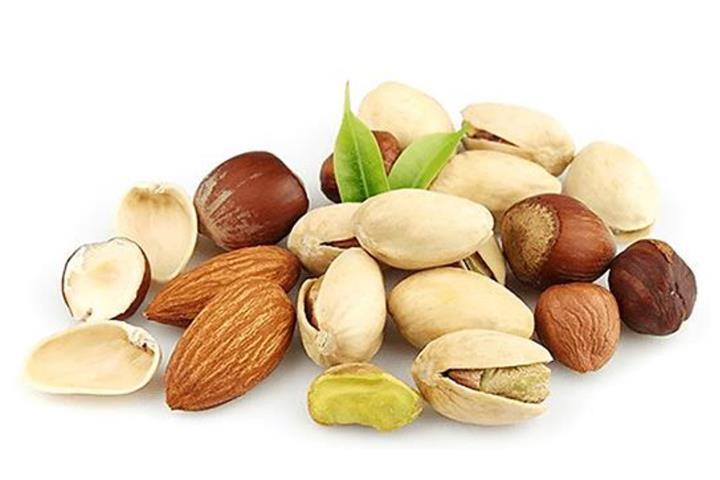
The cultivation of nuts in Spain maintains its line of expansion, driven by the considerable increase in demand for these products on an international scale, and especially in the European Union, according to a study published by the Ministry of Agriculture, Fisheries and Food (MAPA) today on its website that analyses the productive reality of the sector.
This publication completes the analysis of surfaces of fruit trees that began in April with stone fruit, continued in July with citrus fruits and now conclude with nuts.
The information analysed in the study collects data from almost 80% of the sector as a whole. It follows that pistachio is one of the crops with the greatest expansion process in recent years, and now reaches 48,000 planted hectares, with growth in 2020 of 31% in dry land and 20% in irrigated land, for the that 63% of the surface has not yet entered into production.
The almond tree remains the majority crop, with about 600,000 hectares analysed in this study. Although in a lesser proportion than in previous years, in 2020 there were surface growth that reached 3% in dry land and 10% in irrigated land. For this crop, the new plantations account for 18% of the total planted area, although in the case of irrigation it reaches 26%.
Also noteworthy in almond cultivation is the varietal change observed for new plantations. Although guara continues to be the majority, in the case of the dry almond tree, the traditional varieties of comuna, largueta and marcona, barely represent 5% of the total of new plantations carried out between 2017 and 2020, when they account for 41% of the surfaces older.
The lauranne variety reaches 20% of the new plantations, and others such as avijor, pentacebas CSIC and Vairo add 17%. The varietal change is a reflection of a clear adaptation both to the balance of the market and its structure of demands and to the conditions of each territory and production area.
The study also shows that walnut is another clearly growing crop, with a registered area of 9,550 hectares, of which 27% are new plantations that have not yet entered into production.
The publication also makes an analysis of hazelnut, carob and chestnut. For hazelnut, a stagnation and even decline in the production area is deduced, especially in dry land. For carob and chestnut, the representativeness of the recorded data is not optimal, so no clear conclusions can be drawn.
Information sources
In 2019, it was introduced the obligation for the areas of fruit trees to collect through the single application of the Common Agricultural Policy (PAC) and the inscriptions in the General Register of Agricultural Production (Regepa), the information corresponding to the crop , variety and year of plantation, as a tool to know the productive reality in Spain.
This modification was intended to provide data management for analysis in order to contribute to making valuable information available to the sector for the improvement of knowledge. Having information available to everyone aims to provide professionals with tools to facilitate their business decision making.
The compilation of the data corresponding to the information collected for nuts in both registers, in the years 2019 (with information available on the website) and 2020 has made it possible to carry out this analysis that shows not only the present of the sector, but also the future . This prospect is very important in a sector with growing demand. In the last five years, purchases in the European Union grew by 17%.
The complete document is available on the website of the Ministry of Agriculture, Fisheries and Food.