





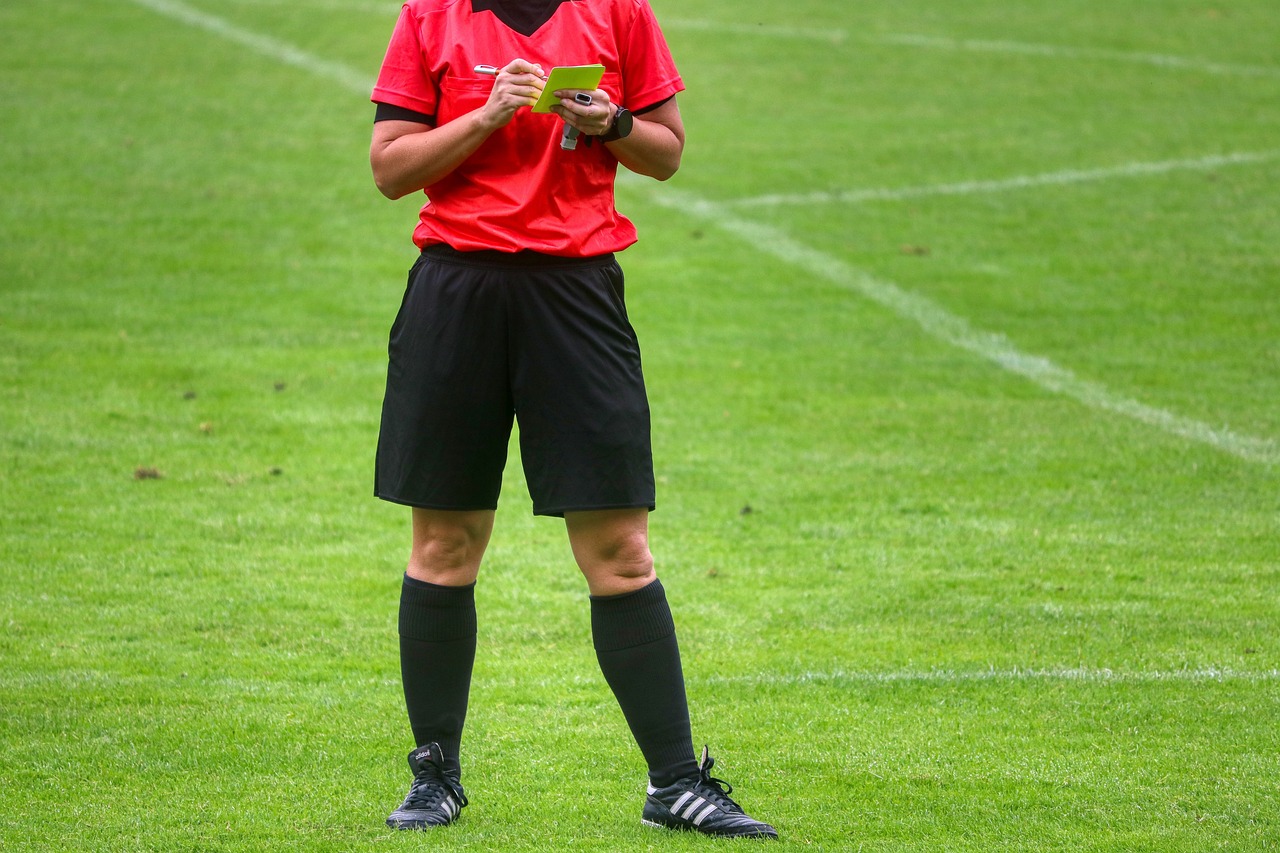
The Civil Chamber of the Supreme Court has issued a ruling in which it considers comments that two people published against a football referee on a Facebook an attack on the honour and dignity of the professional person, after suspending a team’s children’s handball match, understanding that it was not safe for any of the players to compete with glasses that they considered were not suitable for sports practice.
The court considers that they did not limit themselves to criticising the suspension of the handball match, but that they dedicated themselves “to disqualifying him in his personal and professional sphere as a local police officer, in an absolutely disproportionate manner, due to the objective meaning of the phrases uttered and the “absence of connection with respect to his arbitration performance, in which he also does not have to endure notoriously insulting comments.”
The arbitrator filed a lawsuit against four people in which he claimed compensation of 30,000 euro, considering that his fundamental right to honour had been violated as a result of the comments made by the defendants on the Facebook page of the club. A court in Arrecife (Lanzarote) convicted three of the defendants and acquitted another, considering that the plaintiff had waived the action brought against him. The ruling established the joint payment of compensation of 18,000 euro, ordered the removal of the harmful comments and ordered the defendants to publish the ruling on their respective Facebook accounts.
This sentence was appealed before the Provincial Court of Las Palmas de Gran Canaria, which convicted two of the defendants and acquitted two others, reducing the amount of compensation to 12,000 euro. The Supreme Court, for its part, now rejects the appeals filed by the two convicted men against the appealed sentence.
The Chamber refers to the dishonourable comments published by one of the two convicted: “the problem is that this person is full of frustrations and in uniform is a danger to citizens on foot, players and the like. Your arrogance and lack of empathy will take its toll on you, you already do it within the police and you also break the hopes of some children for the mere fact of feeling important (…)”, “he had a very screwed up childhood and as an adult the hate that he has inside comes out, I feel sorry for the unfortunate man”, “I think that’s it… he has always lacked love, that someone loves him and the 21 cm would be great for him.”
It also includes the statements made by the other condemned man: “the poor man is sick, he has little insight, we should campaign to raise money and pay for a doctor for this subnormal”, “what he needs is love…about 21 cm”.
The court concludes that “these expressions exceed the limits of freedom of expression to frontally attack the honour of the plaintiff and his dignity as a person, so, in the indicated context, the appeals filed should not be upheld by the entire set of arguments exposed”.
It adds that “the identification of the recipient does not require their designation with names and surnames, when this is possible, even for people in their closest circle, due to indirect references or concurrent circumstances (SSTS 47/2022, of 31 of January and 910/2023, of June 8, among others), and, in this case, the comments made, such as his status as referee of a specific match and that of his profession as a local police officer, allow the personal identification of the plaintiff ”.
The Chamber rejects the reason for the appeals regarding the fact that the amount of compensation is disproportionate since objective or moral damages are not proven. In its ruling, it recalls that it has already ruled that setting the amount of compensation for compensation for moral damages, in this type of procedure, is the responsibility of the trial courts, whose decision in this regard must be respected. in cassation, unless the criteria established in art. 9.3 LODH or in case of obvious error, arbitrariness or notable disproportion.
In this regard, it indicates that the appealed rulings “appreciate the objective and serious content of the accusations made, which not only affect the sporting field, but also transcend the plaintiff’s professional, as well as aspects of his childhood and private life, with the correlative moral damage they entail, the repercussions they generated, as well as their dissemination on social networks.”
The post 12,000 euro compensation for referee insulted on Facebook appeared first on Spain Today – Breaking Spanish News, Sport, and Information.

Second warmest autumn on record
Government translator contract put to tender